
Blog
Does Ketchup Need to Be Refrigerated? The Real Answer for Restaurants Isn’t About Food Safety.
 June 30, 2026
 Share
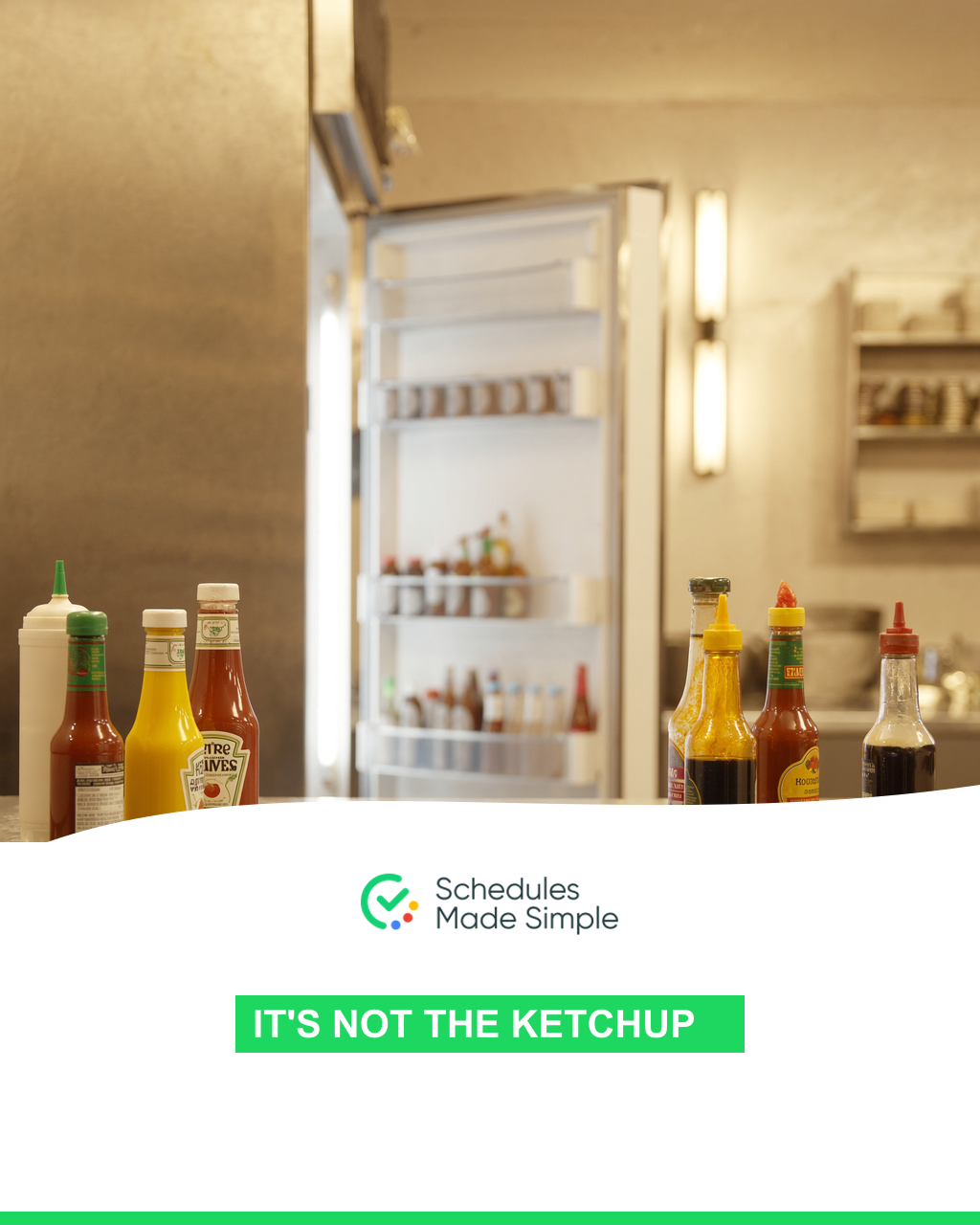
ShareRecent articles, including a condiment storage guide from New York Times Cooking, have reignited a debate about ketchup refrigeration that every kitchen has had at some point: does ketchup actually need to be refrigerated? We think it’s a genuinely useful guide, and it’s worth translating the ketchup refrigeration question for a restaurant kitchen instead of a home one, because the stakes and the reasoning are a little different.
The short answer: no, not for safety. Ketchup’s acidity, sugar, and salt content make it shelf-stable on its own. Under the FDA Food Code, condiments like ketchup, mustard, and most vinegar-based hot sauces aren’t classified as Time/Temperature Control for Safety (TCS) foods, meaning they don’t require refrigeration to stay safe to eat. Refrigerating it is a quality decision, not a food-safety requirement; it slows the gradual darkening and flavor drift that happens at room temperature.
That distinction matters more in a restaurant than at home, because you’re managing two different things at once: what’s safe, and what’s consistent.
Tabletop bottles are a different animal than bulk stock. A squeeze bottle that gets opened, closed, and handled by staff and customers all day isn’t the same as an unopened bulk container in the walk-in. Most operators refrigerate or rotate tabletop condiments anyway, not because the ketchup will spoil, but because warm ketchup reads as “off” to a customer even when it’s perfectly fine, and because consistent temperature is one less variable for a health inspector to ask about.
Pro tip: Give your guests condiment comfort. Add a small pre-printed label on tabletop bottles saying something like “Bottle sanitized after every guest.” This costs almost nothing and is a clear signal that you take sanitation seriously. For your team, it does something just as useful: the label reminds your bussers and servers to sanitize and rotate bottles between guests with a 10-second Lysol sheet wipedown during the table reset. The same idea can apply to menus, condiment caddies, table tents, anything that passes from one guest’s hands to the next.
Some condiments in your kitchen genuinely do need the fridge, and the line isn’t always intuitive. Mayonnaise, fresh salsa, and fresh pickles are TCS or near-TCS items that need real temperature control. Others, like honey, peanut butter, and most oils, actually last longer and stay better at room temperature, and refrigerating them can hurt texture instead of helping safety. Soy sauce, mustard, and hot sauce fall somewhere in between: shelf-stable, but staying colder genuinely preserves flavor.
The actual risk isn’t ketchup. It’s inconsistency. The condiment question only becomes a real problem when every shift handles it differently; one cook refrigerates the squeeze bottles, the next leaves them out overnight, and nobody dated the bulk container that got opened three weeks ago. That’s not really a ketchup refrigeration problem, it’s a training and consistency problem, and it shows up the same way understaffed shifts do: fine most days, until it isn’t.
Put it in writing instead of relitigating it every shift. A short, written condiment-handling standard removes the guesswork: which bottles get refrigerated, how often tabletop bottles get refilled from bulk stock, and how bulk containers get dated once they’re opened. None of this requires anyone on staff to memorize FDA Food Code classifications. It just requires the decision to be made once, written down as part of opening or closing duties, and followed the same way regardless of who’s working that shift. The same logic applies to most “small” kitchen standards that quietly become big problems: walk-in temperature logs, allergen labeling, prep date tracking. None of them are hard individually. They just fall apart the moment they depend on memory instead of a system.
Getting little operational details like this consistent across every shift comes down to the same thing that makes scheduling itself work: making sure the right people, trained the right way, are on the floor when it matters. That’s a smaller lever than labor cost, but it’s the same muscle.
This post reflects our own take and isn’t a substitute for official food safety guidance. For authoritative storage and handling standards, reference a publication like ServSafe’s Properly Store Food guide, or your local health department’s food code.
Related Post
The Best Professional Thermometers for Independent Restaurants
Picking a professional, restaurant-grade thermometer can be overwhelming. Dozens of models,
Read More
Download the App for Free and Discover How Effortless Team Management Can Be


